Vol control funds are loaded and dealer gamma is thinning: the next sharp drop sells itself. Trend following is where the diversification sits.
Key Takeaways
Vol control funds are running near their highest exposure in five years with a cut already locked in. Another 2% drop would force tens of billions of mechanical selling, and roughly twice that on 3%.
Dealer gamma fell sharply on Friday and is one bad session from turning negative, where hedging joins the move and next-day swings have run about two and a half times their normal size.
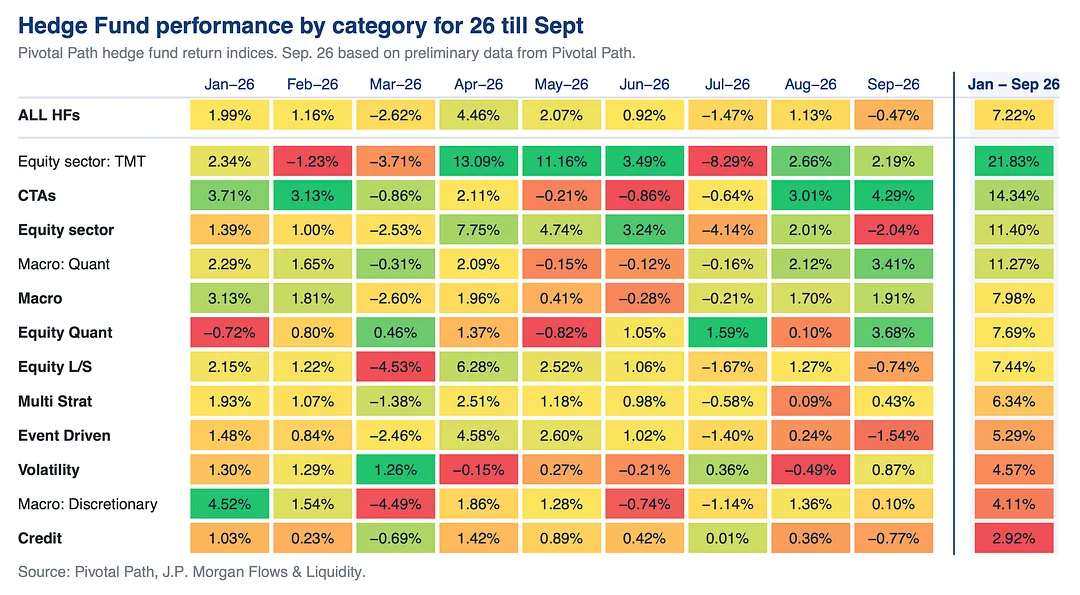
Trend following has outperformed every major hedge fund strategy this year, and its real value is diversification: it tends to pay most when an equity sell-off persists.
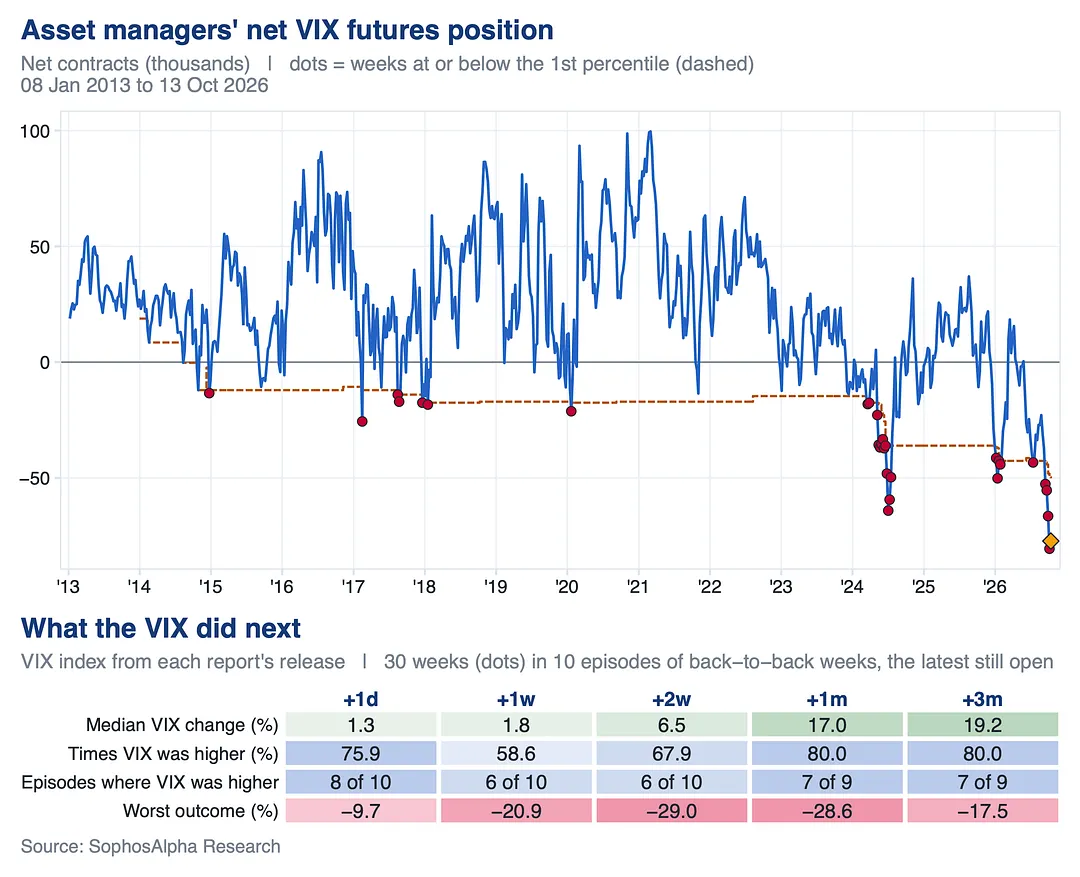
Asset managers have bought back close to half of their record VIX short since early October, so the demand that came from it is far smaller now, while levered funds built their largest Nasdaq long since November.
Portfolio Manager’s Summary
What happens to the market if volatility picks up and persists? We set the fundamentals aside and look only at the selling that mechanical strategies would be forced into.
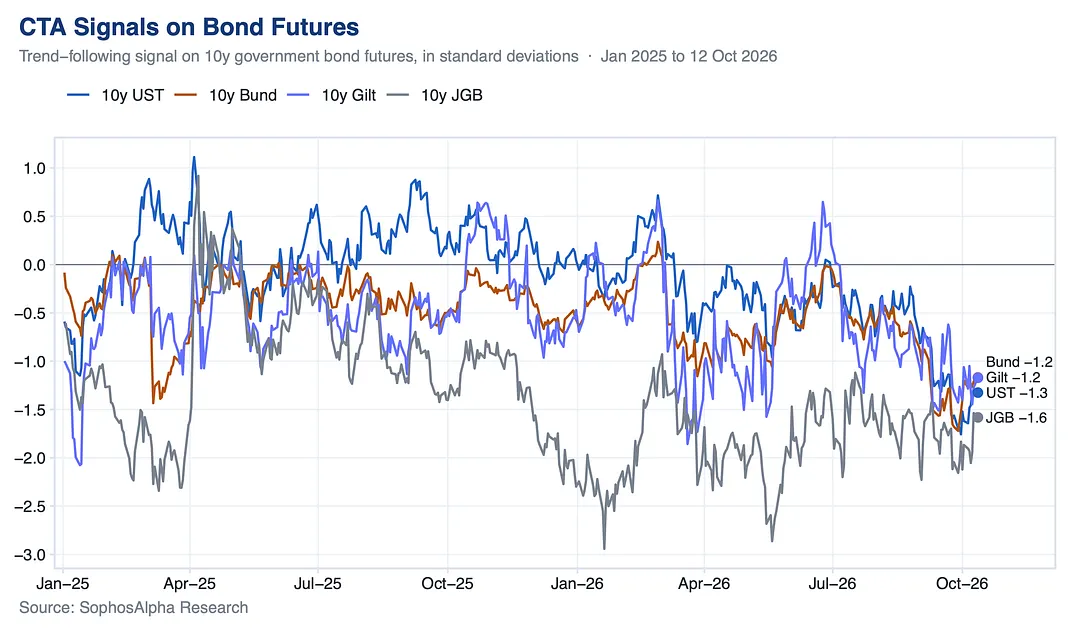
On our numbers, another 2% decline in the S&P would force tens of billions of mechanical selling from vol control funds alone, and roughly twice that on a 3% decline, with CTAs having already sold and leveraged ETFs selling into the same move, and dealers set to join them once the market’s cushion runs out.
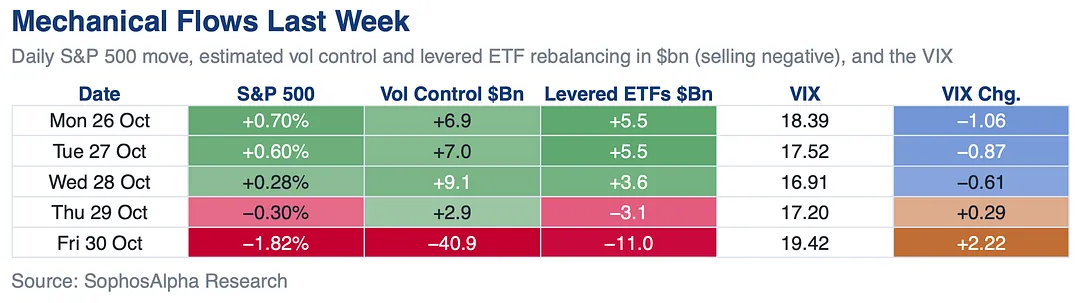
Four days of buying, undone in one session.
With vol control exposure already in the top 5% of the last five years, the market is increasingly vulnerable to a self-reinforcing feedback loop.
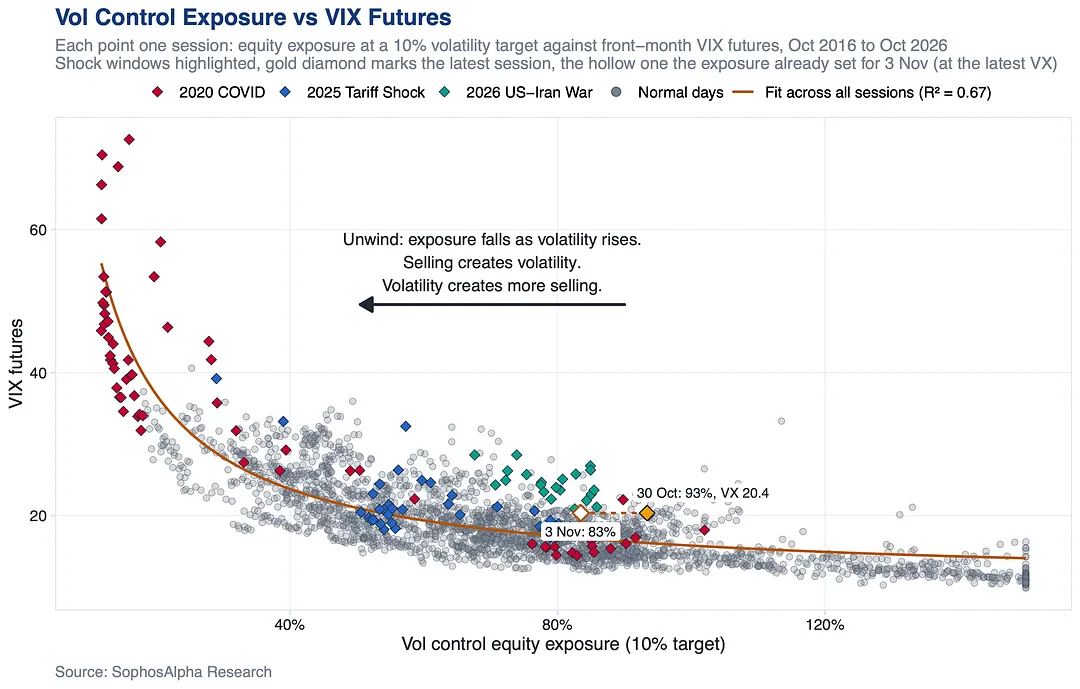
This is not a “view” these funds hold, it is a rule they follow. Their exposure moves inversely with realised volatility, so the calm that let them lever up is the same input that now forces them out. Friday’s drop has already locked in a cut for Tuesday before markets even reopen, and every further sharp down day adds to it. The chart above shows where that path leads if volatility persists: in COVID and the 2025 tariff shock the same funds were pushed down to a fraction of today’s exposure, selling the whole way.
With gamma at spot on the verge of slipping negative, the selling can get uglier.
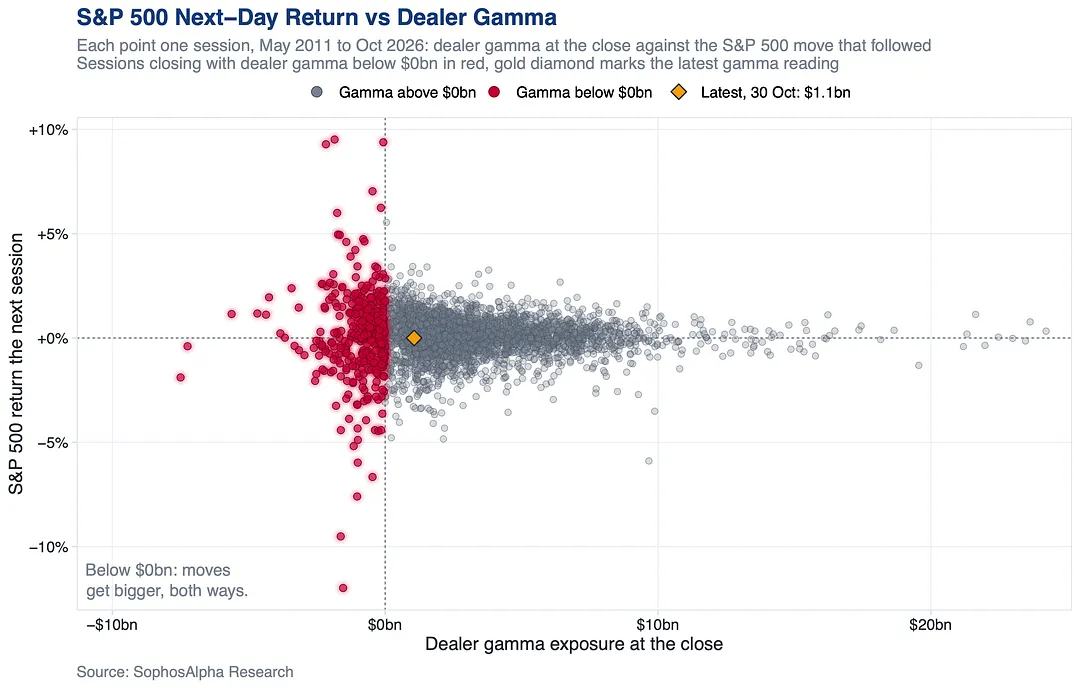
Gamma at spot fell sharply on Friday, and another session like it would take it below zero. Above zero, dealer hedging leans against the move. Below it, the hedging joins the move, and next-day swings have run about two and a half times their normal size, in both directions. Forced sellers meeting a market that has lost its cushion is how a pullback turns into a run.
Key takeaway: The selling from here is mechanical, not discretionary. Vol control funds are running near their highest exposure in five years with a cut already locked in, and dealer gamma at spot is one bad session away from turning negative. A quiet week lets both reset; another sharp down day hands the market forced sellers and no cushion at the same time.